
Dental X-Rays in Phoenixville, PA
See What a Visual Exam Cannot Reveal
Some dental problems develop beneath the enamel, between teeth, below the gumline, or inside the jawbone. They may not cause pain or appear during a visual examination until they have already progressed.
Professional dental X-rays in Phoenixville, PA give our team a clearer view of your teeth and supporting structures. At Phoenixville Dental, diagnostic images help us detect concerns earlier, plan treatment accurately, and avoid recommending care without enough clinical information.
What is Dental X-ray Imaging?
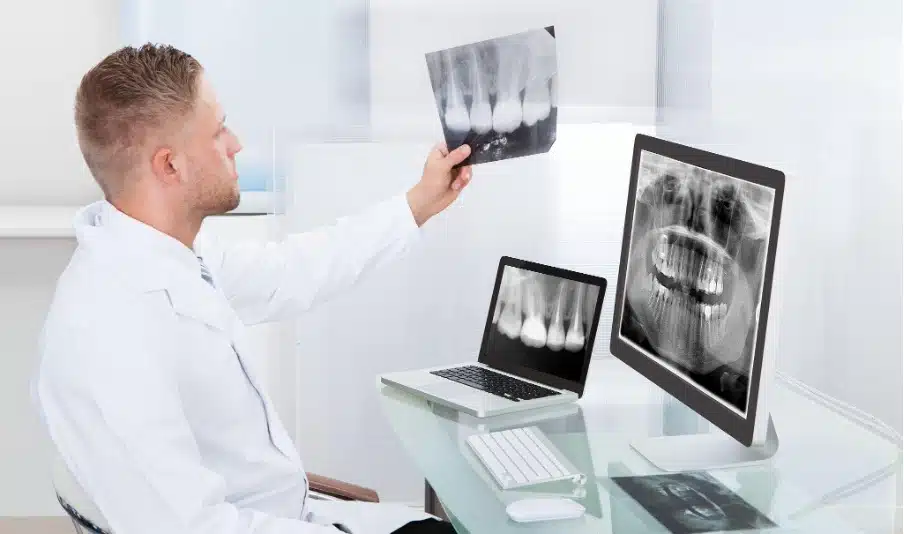
Dental X-rays create images of areas that cannot be examined fully by looking inside your mouth alone. They can reveal changes within a tooth, beneath an existing restoration, between closely positioned teeth, and in the bone supporting your smile.
Depending on your needs, X-rays may help identify:
- Cavities between teeth
- Infection near a tooth root
- Bone loss around the teeth
- Impacted or unerupted teeth
- Cracks or damage below the visible surface
- Problems beneath crowns or fillings
- Changes in jawbone structure
- Tooth development in children and teens
- Areas that may require further evaluation
Early detection can make treatment more straightforward. A small cavity found through diagnostic imaging may only require a dental filling, while an undetected problem may eventually affect more of the tooth.

How Dental X-Rays Work
Different dental X-rays show different parts of the mouth. We select the type of image based on what needs to be evaluated rather than taking every possible view at each appointment.
Bitewing X-Rays
Bitewings show the upper and lower back teeth together. They are commonly used to detect cavities between teeth and examine the bone level around them.
Periapical X-Rays
A periapical image shows the complete tooth, including the crown, root, and surrounding bone. It may be used when investigating pain, infection, trauma, or a concern near the root.
Panoramic X-Rays
A panoramic image provides a broad view of the teeth, jaws, and surrounding structures. It can help assess wisdom teeth, developing teeth, jaw conditions, and overall treatment needs.
Diagnostic Imaging for Treatment Planning
Certain procedures require detailed images before care begins. For example, imaging may support planning for dental implants by helping the dentist evaluate the treatment area and nearby structures.
The image itself is captured quickly. Depending on the type of X-ray, a small sensor may be placed inside your mouth, or imaging equipment may move around the outside of your head. Your dentist then reviews the image alongside your symptoms, dental history, and clinical examination.
Benefits of Dental X-Rays
Earlier Cavity Detection
X-rays can reveal decay between teeth and beneath certain restorations before it becomes visible or causes discomfort.
More Accurate Diagnosis
Diagnostic images help us investigate tooth pain, sensitivity, swelling, infection, trauma, and changes in the supporting bone.
Better Treatment Planning
X-rays provide important information before procedures involving tooth roots, jawbone, wisdom teeth, implants, or other restorative treatment.
Developmental Monitoring for Children
Children’s mouths change quickly as primary teeth fall out, permanent teeth develop, and the jaws continue to grow. Dental X-rays can help monitor tooth position, eruption, injuries, and available space.
Our approach to pediatric dentistry in Phoenixville focuses on recommending images only when they provide useful information for a child’s care.
Fewer Unnecessary Assumptions
Dental imaging is not a diagnosis by itself, but it gives us more evidence. When the cause of a symptom is unclear, better information helps us avoid making treatment recommendations based only on guesswork.
Controlled, Need-Based Imaging
Dental X-rays use a controlled amount of radiation. We recommend only the images that are clinically appropriate for your situation, rather than following the same schedule for every patient.


Why Choose Phoenixville Dental for Diagnostic Imaging?
Dental X-rays are most useful when they are interpreted within the context of your complete oral health. We do not evaluate an image in isolation or recommend treatment based on a single finding without considering the rest of your examination.
Our team reviews:
-
Your symptoms and dental history
-
The condition of your teeth and gums
-
Existing crowns, fillings, bridges, or implants
-
Your bite and tooth alignment
-
Previous images and treatment
-
Your cavity and periodontal risk
-
The reason the image was taken
For example, persistent pain may point to inflammation or infection inside a tooth. An X-ray can help us evaluate the root and surrounding bone before determining whether root canal therapy or another treatment is appropriate.
We also take time to show you relevant findings and explain what they mean. You should understand why care is being recommended and how the X-ray supports that decision.
What to Expect During Your X-Ray Appointment
Receiving dental X-rays is typically quick and comfortable.
1. We Review Your Needs
Before taking images, we consider your dental history, current concerns, symptoms, and previous X-rays.
2. We Position the Sensor or Imaging Equipment
For some images, a small sensor is placed inside the mouth. Other images are captured while equipment moves around the outside of your head.
3. You Remain Still for a Few Seconds
The image itself is taken quickly. Our team helps position you correctly so we can obtain a useful image without unnecessary retakes.
4. We Review the Results
Your dentist examines the images alongside the visual and clinical findings from your examination.
5. We Explain Any Recommended Care
When an X-ray reveals a concern, we show you what we see and explain the available next steps. You should understand why treatment is recommended before making a decision.
Cost and Dental Insurance
The cost of dental X-rays depends on the type and number of images required. Coverage also varies among dental insurance plans.
Many plans include certain diagnostic images as part of preventive or comprehensive care, but frequency limitations may apply. Before treatment, our team can help review your expected benefits and explain any estimated out-of-pocket cost.
Patients without traditional coverage can explore our insurance and payment plans, including in-house membership options designed to make routine care more manageable.
Meet Dr. Troy Oracko
Clearer Diagnosis Backed by Broad Clinical Experience
Dr. Troy Oracko earned his bachelor’s degree in biology from Indiana University and graduated near the top of his class at Midwestern University College of Dental Medicine in Downers Grove. With more than 100 hours of continuing education in general, cosmetic, and implant dentistry, he brings a broad clinical perspective to every diagnosis. This experience helps him interpret X-rays and diagnostic images in the context of your complete oral health, including your symptoms, bite, gum health, existing dental work, and long-term treatment needs. Dr. Troy also takes a patient-centered approach by explaining relevant findings clearly, helping you understand your options and feel confident about the care you choose.
What Patients Say About Phoenixville Dental
Convenient Diagnostic Dental Care in Phoenixville
Phoenixville Dental is located at:
883 Valley Forge Road
Phoenixville, PA 19460
We welcome patients from Phoenixville and nearby communities, including Valley Forge, Kimberton, Mont Clare, Oaks, Spring City, and surrounding Chester County areas.
New patients: (484) 642-7642
Current patients: (610) 933-3717
Office Hours
Monday: 8:00 AM–6:00 PM
Tuesday: 8:00 AM–4:00 PM
Wednesday: 1:00 PM–7:00 PM
Thursday: 8:00 AM–6:00 PM
Friday–Sunday: Closed
Frequently Asked Questions About Dental X-Rays in Phoenixville, PA
How often should I receive dental X-rays?
The right frequency depends on your dental history, age, cavity risk, gum health, symptoms, and previous images. We recommend X-rays only when they provide useful diagnostic information.
Can dental X-rays detect cavities?
Yes. X-rays can reveal cavities between teeth and beneath certain existing restorations where decay may not be visible during a routine examination.
Frequency depends on your cavity risk. Some patients receive fluoride during routine six-month visits, while higher-risk patients may need it more often.
Do dental X-rays hurt?
No. Taking an X-ray should not be painful, although holding an intraoral sensor may feel slightly uncomfortable for some patients. The image is captured within seconds.
Are dental X-rays safe for children?
Dental X-rays may be recommended for children when they are needed to evaluate cavities, injuries, tooth development, or eruption. We select images according to each child’s clinical needs.
Should I have X-rays if I do not have tooth pain?
Possibly. Cavities, bone loss, impacted teeth, and other concerns can develop without noticeable pain. Diagnostic imaging may reveal problems before symptoms appear.
Can I receive dental X-rays while pregnant?
Tell our team if you are pregnant or may be pregnant. We will review whether the image is necessary and discuss the appropriate next steps with you.
Will my dental insurance cover X-rays?
Many dental insurance plans provide benefits for diagnostic images, although frequency limits and coverage levels vary. Our team can help you review your expected benefits.
Get a Clearer Picture of Your Oral Health
Problems are often easier to treat when they are detected early. Professional dental X-rays in Phoenixville, PA can reveal hidden changes, support a more accurate diagnosis, and help us plan care with greater confidence.
Schedule a visit at Phoenixville Dental for a complete evaluation and personalized recommendations based on what your smile actually needs.